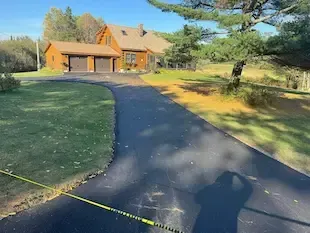
The Complete Guide to Paving a Driveway in Maine | Maine Paving
What do you need to know before paving a driveway in Maine?
Paving a driveway in Maine requires proper excavation, a compacted gravel base built to Maine's frost depth requirements, quality asphalt installation, and correct drainage design. Most residential driveway paving projects in Maine cost between $3,000 and $10,000 depending on size, site conditions, and whether you are doing a new installation or replacing an existing surface. The paving season runs from mid-May through October. Choosing a locally owned contractor with verifiable reviews and a clear on-site estimate process is the most important decision you will make for the long-term performance of the finished driveway.
Paving a driveway is one of the most significant home improvement investments a Maine property owner makes. Done right, a new paved driveway adds curb appeal, improves property value, eliminates mud and dust, and holds up for 20 to 30 years with routine maintenance. Done wrong, it becomes a recurring expense that costs more in repairs over time than a quality installation would have cost in the first place.
This guide covers everything Maine homeowners need to know about the driveway paving process from start to finish: what it costs, how the installation works, when to schedule it, what to look for in a contractor, and how to maintain the finished surface so it reaches its full potential lifespan. Whether you are installing a new driveway for the first time or replacing one that has reached the end of its service life, this guide gives you the information you need to make confident decisions at every stage.
Why Paving a Driveway in Maine Is Different From Other States
Maine's climate creates paving conditions that most of the country does not deal with. Understanding what makes this state demanding on pavement helps you understand why the decisions made during installation matter so much more here than in milder climates.
Frost Depth
Central and Northern Maine frost depths reach 36 to 48 inches in hard winters. A driveway base that does not account for these depths will heave, crack, and fail ahead of schedule as frost moves through the ground beneath it. Every paving decision in Maine, from how deep to excavate to what base material to use, is shaped by this reality. You can read more about how frost affects pavement in our post on frost heave and driveway damage in Maine.
Freeze-Thaw Cycling
The freeze-thaw cycle is the primary mechanism of pavement deterioration in Maine. Water enters the surface, freezes, expands, and widens whatever opening let it in. This cycle repeats dozens of times over a Maine winter, compounding the damage with every repetition. A driveway that was not built to shed water, or that has not been maintained with regular sealcoating, is absorbing this process unprotected.
Road Salt and Snowplow Traffic
Maine's heavy road salt use and the mechanical stress of snowplow contact accelerate surface wear on driveways. A properly installed driveway with clean edges, correct thickness, and a sealed surface handles these conditions significantly better than one that was built with shortcuts.
Short Paving Season
The paving season in Maine runs from approximately mid-May through October. Outside of that window, asphalt cannot be laid and compacted correctly because the temperatures required for proper installation are not present. This compressed schedule means planning ahead matters more in Maine than in states with year-round paving seasons. You can read more about seasonal timing in our post on the best time of year to pave a driveway in Maine.
Types of Driveway Paving Projects in Maine
Not every driveway paving project is the same. Understanding which category your project falls into helps you set realistic expectations for scope, cost, and timeline.
New Driveway Installation
A new driveway installation starts from bare ground with no existing paved surface. This is the most comprehensive scope of paving work because everything, site clearing, excavation, grading, base construction, and asphalt installation, has to be done from scratch. It is also the project that gives you the most control over the quality of what is built, because there is no existing surface or base condition constraining what can be done.
New installations are the highest upfront investment but the best opportunity to build a driveway that performs correctly from day one and reaches the top end of its potential lifespan.
Driveway Replacement
A driveway replacement involves removing an existing paved surface before installing a new one. The demolition and disposal of the old surface adds cost compared to a new installation over bare ground, but replacement also gives you the opportunity to correct any base or drainage problems that caused the original driveway to fail or deteriorate. A replacement done right, with the base assessed and rebuilt where needed, performs as well as a new installation.
A replacement done wrong, where new asphalt is laid over a compromised base without addressing the underlying problems, recreates the same failure on a shorter timeline. Maine Paving assesses the base condition on every driveway replacement project and rebuilds what needs to be rebuilt before the new surface goes down.
Driveway Resurfacing
Resurfacing, or overlay, means applying a new layer of asphalt over an existing surface without removing what is underneath. It is less expensive than full replacement but is only appropriate when the existing base is still structurally sound and the surface damage is limited to the top layer. Resurfacing over a failed base creates the same problems on a shorter timeline. A proper assessment determines whether resurfacing is the right solution or whether full replacement is the more economical long-term choice.
Driveway Repairs
When damage is isolated to specific areas and the base underneath is still structurally sound, targeted repairs can extend the life of an existing driveway meaningfully. Crack filling, pothole repair, and dig-out repairs for localized base failure are all repair options that make economic sense in the right circumstances. Maine Paving provides honest assessments of driveway condition and recommends repairs when they are the right call, not replacement.
The Driveway Paving Process: What Actually Happens
Understanding what happens during a paving project helps you evaluate what you are getting and identify when a contractor is skipping steps that matter.
Step 1: Free On-Site Consultation and Estimate
Every driveway paving project at Maine Paving starts with a free on-site consultation. We come to your property, walk the site, and assess the existing conditions firsthand. That means looking at the current surface or ground conditions, evaluating drainage, identifying any site-specific challenges, and determining the full scope of what the job requires. From that visit we provide a written estimate that covers the complete project cost before anything gets scheduled.
A contractor who quotes without visiting the site is guessing. The variables that affect driveway paving cost, soil conditions, drainage requirements, access, existing base condition, are only visible on the ground.
Step 2: Site Preparation and Demolition
If you are replacing an existing driveway, the old surface and any compromised base material has to come out first. Maine Paving handles demolition and removal with our own crew and equipment. The site is cleared of the old material, the base is assessed, and any drainage or grading corrections are identified before new work begins.
For new installations, site preparation means vegetation removal, topsoil stripping, and excavation to the appropriate depth for the base that needs to be built.
Step 3: Excavation and Grading
Proper excavation and grading are the foundation of a driveway that lasts. In Maine, excavation needs to reach adequate depth to allow for the gravel base required by local frost depth conditions. The excavated area is then graded to establish the drainage slope that will move water away from the surface and away from the home's foundation.
This step is where most of the performance differences between a quality driveway and a poor one are determined. A driveway graded correctly from the start sheds water properly for its entire service life. One that was not graded correctly develops drainage problems that undermine the base over time.
Step 4: Base Construction
The gravel base is the most important structural component of a paved driveway in Maine. Most residential driveways in Central and Northern Maine are built on 8 to 12 inches of compacted crushed gravel. The base distributes the load of vehicle traffic across a stable platform, provides drainage through its non-frost-susceptible material, and prevents frost heave by keeping the native soil below the frost line from affecting the pavement above it.
Base material is installed and compacted in lifts, with each layer verified before the next goes down. The finished grade of the base is checked to confirm that drainage is working as intended before asphalt is ordered.
Step 5: Asphalt Installation
Asphalt leaves the plant at approximately 275 to 300 degrees Fahrenheit and needs to be laid and compacted before it cools below workable temperature. Experienced crews work efficiently to ensure the material is placed and compacted correctly while it is still at temperature. Asphalt that cools too much before compaction is weaker, less dense, and more vulnerable to deterioration.
Standard residential driveways are typically installed at 2 to 3 inches of compacted asphalt thickness. Driveways that see heavier loads, or commercial surfaces with higher traffic demands, are built to thicker specifications. Maine Paving uses locally produced asphalt mixed for this climate and installs it to the thickness and compaction specifications that the project requires.
Step 6: Finishing and Cleanup
Once the asphalt is laid and compacted, the edges are cleaned up and finished, the site is cleared of equipment and any debris, and the finished surface is walked to confirm it meets our standard before we leave. Most residential driveway paving projects are completed in one to two days depending on size and site preparation requirements.
You will receive guidance on curing time before vehicle traffic, when to schedule the first sealcoating, and how to reach us if you have any questions after the project is complete.
How Much Does Paving a Driveway Cost in Maine?
Cost is almost always the first question homeowners ask, and the honest answer is that it depends on the specific project. But there are useful ranges that give you a starting point for planning.
New Driveway Installation Cost
Most residential new driveway installations in Maine cost between $3,000 and $10,000 depending on the size of the driveway, the amount of excavation and base construction required, and site-specific conditions like drainage work, access challenges, or difficult soil. Per-square-foot costs for the asphalt installation itself typically run between $3.50 and $7.00. When you add excavation, base material, and grading, total per-square-foot project costs often land between $5.00 and $10.00. For more detail on what drives paving costs, read our post on how much driveway paving costs in Maine.
Driveway Replacement Cost
Replacement projects cost more than new installations over bare ground because of the demolition and removal of the existing surface. The old asphalt has to be broken up, loaded, and hauled away before new work can begin. Depending on the size of the driveway and the thickness of the existing surface, demolition adds a meaningful per-square-foot cost to the total project.
Ongoing Maintenance Cost
The cost of paving a driveway does not end at installation. Keeping a paved driveway in good condition requires sealcoating every two to three years and crack filling as cracks develop. Sealcoating a standard residential driveway typically costs between $250 and $600. Crack filling costs vary based on the number and severity of cracks. These are modest ongoing investments that significantly extend the service life of the finished surface. Read more about sealcoating timing in our post on when to sealcoat a driveway in Maine.
When to Schedule Driveway Paving in Maine
The paving season in Maine runs from approximately mid-May through October. Within that window, timing affects both scheduling availability and the curing conditions for the finished driveway.
Late spring, specifically May through July, is the strongest window for paving. The temperatures are consistently in the range that asphalt requires, the ground has stabilized after spring thaw, and a driveway installed in late spring has the entire summer to cure before its first Maine winter. This is also the busiest time of year for paving contractors in Maine, which means the best contractors fill their schedules quickly.
The practical implication is that getting your estimate done in March or April and securing a place on a contractor's schedule before the season opens is almost always better than waiting until June or July to start making calls. Good contractors in Bangor, Newport, Waterville, Augusta, and Ellsworth are often booked weeks ahead by mid-spring.
Fall paving is viable through September and into early October in most years, though the window closes faster than most homeowners expect. A driveway installed in September goes into its first winter with less curing time than a spring installation, which is worth factoring into the timing decision.
How to Maintain a Paved Driveway in Maine
A new paved driveway is an investment that rewards consistent maintenance. The habits that extend driveway lifespan in Maine are straightforward and not expensive individually.
Sealcoating Every Two to Three Years
Sealcoating is the single most effective maintenance step for an asphalt driveway in Maine. It closes surface pores that allow water infiltration, protects against UV oxidation, and provides a barrier against road salt exposure. The first sealcoat should be applied six months to one year after new installation. After that, every two to three years keeps the surface properly protected. Read more about sealcoating frequency in our post on how often to sealcoat a driveway in Maine.
Filling Cracks Promptly
Crack filling as soon as cracks appear prevents water from establishing a path into the base. In Maine's freeze-thaw climate, a crack that goes unfilled through winter will be significantly wider and deeper by spring. Filling cracks before winter is one of the most effective protective measures a Maine homeowner can take.
Maintaining Drainage
Keeping the drainage working correctly means clearing debris from drainage channels, making sure downspouts are not directing water onto the driveway surface, and addressing any grading issues that develop over time. Water that pools on or around the driveway is the starting point for most driveway failures in Maine.
Avoiding Sharp Metal Tools on the Surface
Snow shovels and plow blades with sharp metal edges gouge and chip asphalt surfaces. Rubber-edged shovels and plow blades protect the surface through winter. Avoiding heavy vehicle traffic during the mud season thaw period also protects the base from stress when it is most vulnerable.
How to Choose the Right Paving Contractor in Maine
Choosing the right contractor is the most important decision in the entire driveway paving process. The quality of the installation determines the performance of the finished surface more than any other single factor. For a comprehensive guide to contractor selection, read our post on how to choose a paving contractor in Maine.
The short version is this: look for a locally owned company with verifiable reviews, a free on-site estimate process, transparent itemized pricing, their own crew and equipment, and a satisfaction guarantee. Avoid contractors who quote without visiting the property, pressure you to sign immediately, offer unusually low prices, or show up unsolicited in spring.
Maine Paving checks every box on that list. We are locally owned and based in Newport. We come to your property before quoting anything. We provide written estimates that cover the full scope of work. We do the work with our own crew. And we back every project with our satisfaction guarantee.
Frequently Asked Questions About Paving a Driveway in Maine
How long does paving a driveway take in Maine?
Most residential driveway paving projects are completed in one to two days depending on size and the amount of site preparation required. Larger projects with significant excavation, grading, or demolition work may take longer. Maine Paving provides a clear timeline as part of every estimate so you know what to expect before work begins.
How long after paving can I drive on my new driveway?
Freshly paved asphalt is typically safe for vehicle traffic within two to three days under normal summer conditions. Full curing takes six months to one year. During that initial curing period, avoid parking heavy vehicles in the same spot repeatedly and try not to turn the steering wheel while the vehicle is stationary, as both can leave marks in fresh asphalt that is still hardening.
How long does a paved driveway last in Maine?
A properly installed and maintained asphalt driveway in Maine lasts between 20 and 30 years. Driveways built with proper base preparation and maintained with regular sealcoating reach the higher end of that range. Those that skip maintenance in Maine's climate often show significant deterioration within 10 to 15 years. Read more in our post on how long a paved driveway lasts in Maine.
Do I need a permit to pave a driveway in Maine?
Permit requirements vary by municipality. In most Maine towns, a standard residential driveway replacement does not require a permit, but a new installation that creates a new curb cut at the road, or a project above a certain square footage, may require one. Maine Paving advises on permit requirements as part of the estimate process and can help you understand what your specific municipality requires before work begins.
Can I pave over my existing gravel driveway in Maine?
In some cases, yes. Paving over an existing gravel driveway is possible when the gravel base is deep enough, well-compacted, and adequately drained. In other cases, the gravel needs to be excavated and a proper compacted base installed before asphalt can be laid. Maine Paving assesses existing gravel driveways as part of the on-site estimate and gives you a clear answer on whether paving over the existing material is appropriate or whether a more thorough base preparation is needed.
Maine Paving provides free on-site estimates for driveway paving, asphalt installation, sealcoating, crack filling, and site preparation across Bangor, Newport, Waterville, Augusta, and Ellsworth. Whether you are paving a new driveway for the first time or replacing one that has run its course, we would love to talk about your project. Call us at (207) 745-1461 or visit themainepaver.com to request your free estimate today.