How Long Does a Paved Driveway Last in Maine?
How long does a paved driveway last in Maine?
A properly installed asphalt driveway in Maine lasts between 20 and 30 years. Reaching that lifespan depends on three things: a quality installation with the correct gravel base and drainage, routine sealcoating every two to three years, and prompt attention to cracks or damage before Maine's freeze-thaw cycles make them worse. Driveways that skip regular maintenance or were installed without proper base preparation typically show significant deterioration within 10 to 15 years.
If you are thinking about paving a driveway or wondering how much life is left in the one you already have, this is the question that matters most. The honest answer is that a well-installed asphalt driveway in Maine can last 20 to 30 years. But getting there requires more than just good asphalt. It requires proper installation, the right base, and routine maintenance along the way.
Maine is not an easy place to be pavement. The climate here puts asphalt through conditions that wear it down faster than most parts of the country. Understanding what affects your driveway's lifespan and what you can do to extend it can save you a significant amount of money over the long run.
How Long Does Asphalt Last on Average?
A properly installed asphalt driveway typically lasts between 20 and 30 years. That range is wide for a reason, the lifespan of any driveway depends heavily on how it was built, how well it has been maintained, and what conditions it has been exposed to over the years.
Driveways that were installed with a proper gravel base, correct grading, and quality asphalt tend to last toward the higher end of that range. Driveways that had corners cut during installation, thin base layers, poor drainage, or low-quality materials, often start showing significant problems within 10 to 15 years. In Maine, where the climate adds an extra layer of stress on pavement, the difference between a well-built driveway and a poorly built one becomes very apparent over time.
What Makes Maine Hard on Driveways
Maine's climate is one of the toughest environments for asphalt in the country. Here is what accelerates driveway wear in this part of the world:
Freeze-thaw cycles.
When water gets into small cracks in the asphalt and then freezes, it expands. That expansion widens the crack. When it thaws, the water goes deeper. This cycle repeats dozens of times over a single winter and is one of the primary causes of driveway deterioration in Maine.
Road salt and sand.
The same materials that keep roads safe in winter are hard on asphalt. Salt accelerates oxidation and can break down the binder in asphalt over time. Combined with abrasion from sand and gravel, it adds up to meaningful wear season after season.
Heavy snowfall and plowing.
Snowplow blades put stress on driveway edges and aprons. A driveway that was not properly edged or does not have a smooth transition at the road is more vulnerable to plow damage than one that was installed with those details in mind.
UV exposure.
Maine summers bring plenty of sun, and UV rays dry out and oxidize asphalt over time. This is what turns a black driveway gray and makes the surface brittle. Left unprotected, oxidized asphalt cracks more easily and deteriorates faster.
How Sealcoating Extends the Life of Your Driveway
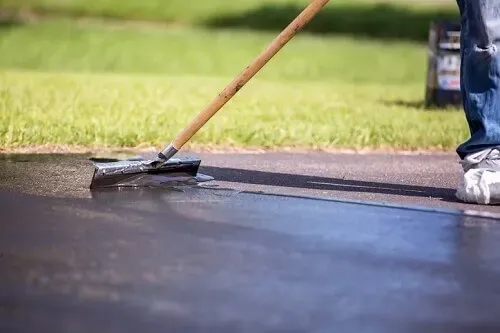
Sealcoating is the single most effective maintenance step you can take to extend the life of an asphalt driveway. It creates a protective barrier over the surface that shields the asphalt from water, UV rays, road salt, and general wear. Done on a regular schedule, it significantly slows the oxidation and cracking that shortens driveway lifespan.
Most driveways in Maine should be sealcoated for the first time six months to a year after installation, once the asphalt has had time to fully cure. After that, a sealcoating every two to three years keeps the surface properly protected. Skipping this step does not mean nothing happens — it means the asphalt is absorbing everything the Maine climate throws at it without any protection, and the deterioration shows up faster than most homeowners expect.
Sealcoating is also one of the most cost-effective home maintenance investments you can make. The cost of sealcoating a driveway is a fraction of what it costs to repair significant damage or replace the surface entirely. Staying ahead of it is almost always the more affordable path.
When to Repair and When to Replace
Knowing whether your driveway needs repairs or a full replacement is not always obvious. Here is a general guide:
Repairs make sense when the damage is limited to specific areas — isolated cracks, a pothole or two, or surface deterioration in one section. If the base underneath is still solid and the majority of the surface is in reasonable shape, targeted repairs combined with sealcoating can add meaningful life to the driveway.
Replacement is the better call when cracking is widespread across the whole surface, when the base has been compromised by water damage or settling, or when the driveway is 20-plus years old and showing significant overall deterioration. At that point, repairs become a temporary fix that delays the inevitable while still costing money. A full replacement gives you a fresh start with a properly built surface that will last another 20 to 30 years.
The best way to know which situation you are in is an honest on-site assessment from someone who is not trying to upsell you. That is exactly what our free estimates are for. We look at the surface, the base, and the overall condition and tell you straight what the driveway actually needs.
Signs Your Driveway Needs Attention
Not sure where your driveway stands? Here are the signs that tell you it is time to call a paving contractor:
Cracks are forming and widening. Small hairline cracks are normal on aging asphalt. When those cracks are wider than a quarter inch, spreading across multiple areas, or forming an alligator pattern across the surface, the damage is progressing and needs to be addressed.
The surface is fading and turning gray. A gray driveway is an oxidized driveway. The protective oils in the asphalt have dried out, which means the surface is becoming brittle and more vulnerable to cracking. Sealcoating at this stage can still help if the base is sound.
Potholes are developing. Potholes form when water gets into cracks, freezes, and breaks the surface apart from underneath. A pothole is a sign that the damage has gone beyond the surface layer. It can be repaired, but it is also a signal to assess the overall condition of the driveway.
Water is pooling on the surface. Standing water means the driveway is not draining properly. This accelerates damage because water is constantly working its way into any available crack or weak spot. It can also be a sign of a grading problem underneath.
The edges are crumbling. Driveway edges are one of the first places deterioration shows up, especially if they were not properly finished during installation. Crumbling edges tend to progress inward over time if they are not addressed.
Not Sure What Your Driveway Needs? We Can Help.
If your driveway is showing any of the signs above or you just want an honest assessment of where it stands, Maine Paving offers free on-site estimates across the Bangor, Newport, Waterville, and Augusta areas. We come out, look at the driveway, and give you a straight answer on what it needs — whether that is sealcoating, repairs, or a full replacement. No pressure. No runaround.
Contact Maine Paving today to schedule your free estimate.
For a complete overview of asphalt paving in Maine, visit our Maine Paving Guide.