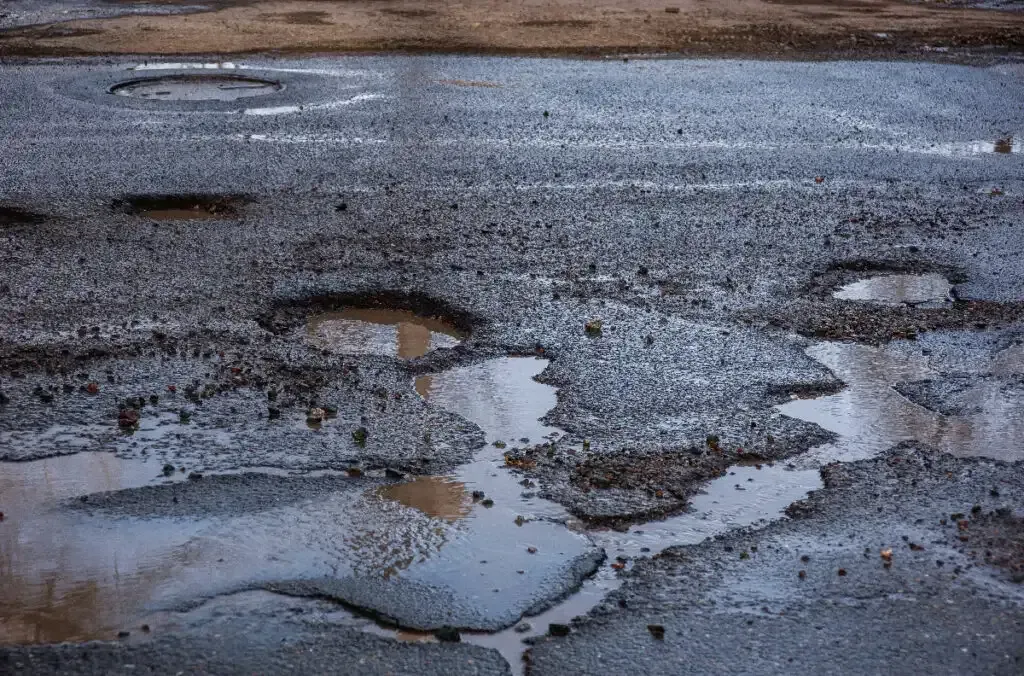
How Maine's Frost Heave Destroys Driveways and What to Do About It
What is frost heave and what does it do to asphalt driveways in Maine?
Frost heave occurs when water in the soil beneath a driveway freezes and expands, pushing the pavement upward from below. In Maine, where frost depths in Central and Northern areas can reach 48 inches in a hard winter, frost heave is one of the most destructive forces an asphalt driveway faces. It creates lifted sections, uneven surfaces, and cracks that allow water to infiltrate deeper into the base, compounding the damage with every freeze-thaw cycle. Driveways built over poorly drained soil or inadequate base material are significantly more vulnerable than those built to Maine's frost depth requirements.
Frost heave is one of those problems that sneaks up on Maine homeowners. One spring you notice a bump in the driveway that was not there before. By the following spring, that bump has become a ridge, and cracks have started forming around it. A few years after that, you are looking at a repair bill that could have been significantly reduced if the problem had been understood and addressed early.
This post covers what frost heave actually is, why Maine driveways are so vulnerable to it, how to recognize it, and what can be done about it at every stage from prevention through repair and replacement.
What Causes Frost Heave in Maine Driveways
Frost heave is not simply the result of cold temperatures. It is the result of water plus cold temperatures plus soil conditions that allow ice to form and grow beneath the pavement surface.
When the ground freezes in late fall and winter, water in the soil does not just freeze in place. In certain soil types, particularly silty and clay-heavy soils common in parts of Central and Northern Maine, water is drawn upward toward the freezing front through a process called capillary action. As this water reaches the freezing zone, it forms ice lenses, horizontal layers of ice that grow thicker as more water is drawn up from below.
These ice lenses can be surprisingly large. As they grow, they push everything above them upward, including the gravel base and the asphalt surface of your driveway. When temperatures rise in spring and the ice melts, the soil loses the support the ice was providing, and the pavement settles, often unevenly, because the thaw does not happen uniformly across the surface.
This cycle of heaving and settling is what creates the bumps, ridges, and cracked sections that are common on Maine driveways that were not built to account for frost depth.
Why Maine Is Particularly Vulnerable
Most of the continental United States does not deal with frost heave at the scale Maine does because frost does not penetrate deeply enough to create the conditions for significant ice lens formation. In Central and Northern Maine, frost depths of 36 to 48 inches are common in average winters, and deeper penetration is possible in exceptionally cold years.
At those depths, the amount of water available to be drawn toward the freezing front is substantial, and the potential for ice lens growth is significant. Add the soil composition in many parts of Maine, which includes the silty glacial till deposits that are highly susceptible to frost heave, and you have conditions that make proper driveway base construction not just a best practice but a necessity.
A driveway built in Georgia with a four-inch gravel base might last for decades without frost-related problems. The same driveway built in Bangor or Newport would likely show heaving within the first few winters.
How to Recognize Frost Heave Damage on Your Driveway
Frost heave damage has a recognizable pattern once you know what to look for.
Raised or uneven sections are the most obvious sign. If part of your driveway has lifted relative to the surrounding surface, creating a bump or ridge that was not there when the driveway was new, frost heave is the most likely cause in Maine's climate.
Longitudinal cracks running along the length of the driveway, or transverse cracks running across it, often appear at the edges of heaved sections where the lifted pavement meets the pavement that has not moved. These cracks allow water to infiltrate directly into the base, which accelerates the damage in subsequent freeze cycles.
Uneven settlement after thaw is another indicator. If sections of your driveway drop noticeably in spring as the ground thaws, the base beneath those sections is not providing uniform support. This can create trip hazards, drainage problems, and accelerated surface deterioration in the affected areas.
Recurring damage in the same location is a strong signal that the base in that area has a persistent drainage or soil problem that is driving repeated frost heave. A patch that keeps failing in the same spot season after season is telling you something about what is happening underneath.
What Determines How Vulnerable a Driveway Is to Frost Heave
Not all Maine driveways are equally at risk. Several factors determine how vulnerable a specific driveway is to frost heave damage.
Base depth is the most important factor. A properly built driveway in Maine should have a gravel base deep enough to account for local frost depth requirements. Crushed gravel does not hold water the way silt and clay do, so a deep gravel base both supports the pavement and prevents the capillary action that feeds ice lens formation. Driveways built with shallow or inadequate base material are significantly more vulnerable.
Drainage is the second critical factor. Frost heave requires water. A driveway site that drains well, with water moving away from the base rather than sitting in the soil beneath the pavement, has far less water available to feed ice lens formation. Poor drainage, whether from site grading, high water tables, or proximity to areas that collect runoff, dramatically increases frost heave risk.
Soil type matters as well. Coarse gravelly soils drain freely and have low frost heave susceptibility. Fine-grained silty soils hold water and have high susceptibility. Many Maine properties have a mix of both, which is why a site assessment before installation is valuable. An experienced contractor who has worked in the area knows what soil conditions to expect and how to build accordingly.
What Can Be Done About Frost Heave
The right response to frost heave depends on where you are in the process.
For a driveway that has not yet been built, the answer is proper base construction from the start. This means excavating to appropriate depth, installing a properly compacted gravel base that accounts for local frost depth, and ensuring drainage is designed to move water away from the base. This is not the cheapest way to build a driveway, but it is the way that prevents frost heave problems rather than reacting to them.
For an existing driveway with minor heaving and cracking, crack filling and monitoring is the first step. Filling cracks before winter limits the water infiltration that feeds further frost heave damage. If the heaving is limited to one or two sections and the base in those areas is otherwise sound, a targeted dig-out repair that removes the affected section, improves drainage in that area, and rebuilds with proper base material can address the problem without a full replacement.
For a driveway with widespread heaving, significant base failure, or recurring problems that keep returning despite repairs, full replacement with corrected base construction and drainage is the appropriate solution. Continuing to patch a driveway that has fundamental base and drainage problems is an ongoing expense that does not solve the underlying issue.
Can Frost Heave Be Prevented Entirely?
In Maine's climate, frost heave cannot be completely eliminated as a risk, but it can be managed to the point where it does not cause significant driveway damage. The combination of adequate base depth, quality base material, and proper site drainage addresses the three conditions that allow frost heave to develop. Driveways built with all three components in place rarely experience the kind of heaving that causes structural damage.
Sealcoating is also part of the prevention equation. A properly sealcoated surface limits water infiltration into the asphalt, which reduces the amount of water available to work its way into the base. It does not eliminate frost heave risk on a site with drainage problems, but it is one of the maintenance steps that keeps a well-built driveway performing as intended through Maine winters.
Frequently Asked Questions About Frost Heave and Driveways in Maine
How deep does frost go in Maine and why does it matter for driveways?
Frost depth in Central and Northern Maine typically reaches 36 to 48 inches in an average winter and can go deeper in exceptionally cold years. This matters for driveways because a gravel base needs to be deep enough to prevent water-saturated soil below the frost line from feeding ice lens formation beneath the pavement. Contractors who build driveways in Maine account for local frost depth in their base specifications. Those who do not, or who cut corners on base depth to reduce upfront costs, are building driveways that are vulnerable to the exact conditions Maine winters create every year.
Is frost heave covered by homeowner's insurance?
In most cases, frost heave damage to driveways is not covered by standard homeowner's insurance policies. Insurance typically covers sudden and accidental damage, and frost heave is considered a gradual process related to natural ground movement. Some policies may have specific exclusions for earth movement that would include frost heave. If you have questions about your specific policy, contact your insurance provider directly. The practical approach for most Maine homeowners is to treat frost heave prevention as part of the investment in proper driveway construction rather than relying on insurance coverage.
Can you repair frost heave damage without replacing the whole driveway?
Yes, in some cases. When frost heave damage is limited to specific sections and the base beneath the rest of the driveway is still structurally sound, a targeted dig-out repair can address the problem areas without a full replacement. This involves removing the damaged section of asphalt and base material, correcting any drainage issues in that area, rebuilding the base to the appropriate depth and specification, and repaving the section. When the same areas keep heaving despite repairs, or when heaving is widespread across the driveway, full replacement with corrected base construction is the more economical long-term solution.
Does sealcoating help prevent frost heave damage?
Sealcoating helps indirectly by limiting water infiltration through the asphalt surface, which reduces the amount of water available to work into the base and contribute to frost heave conditions. It is not a solution to a drainage problem or an inadequate base, but it is one of the maintenance steps that keeps a well-built driveway performing correctly over time. On a driveway with existing drainage or base issues, sealcoating alone will not prevent frost heave. Those underlying conditions need to be addressed directly.
Maine Paving provides free on-site estimates for driveway assessment, frost heave repair, and full driveway replacement across the Bangor, Newport, Waterville, Augusta, and Ellsworth areas. If your driveway is showing signs of heaving, cracking, or uneven settlement, we will come out, look at what is actually happening underneath, and give you a straight answer on what it needs. Call us at (207) 745-1461 or visit themainepaver.com to request your free estimate today.
For a complete overview of asphalt paving in Maine, visit our Maine Paving Guide.