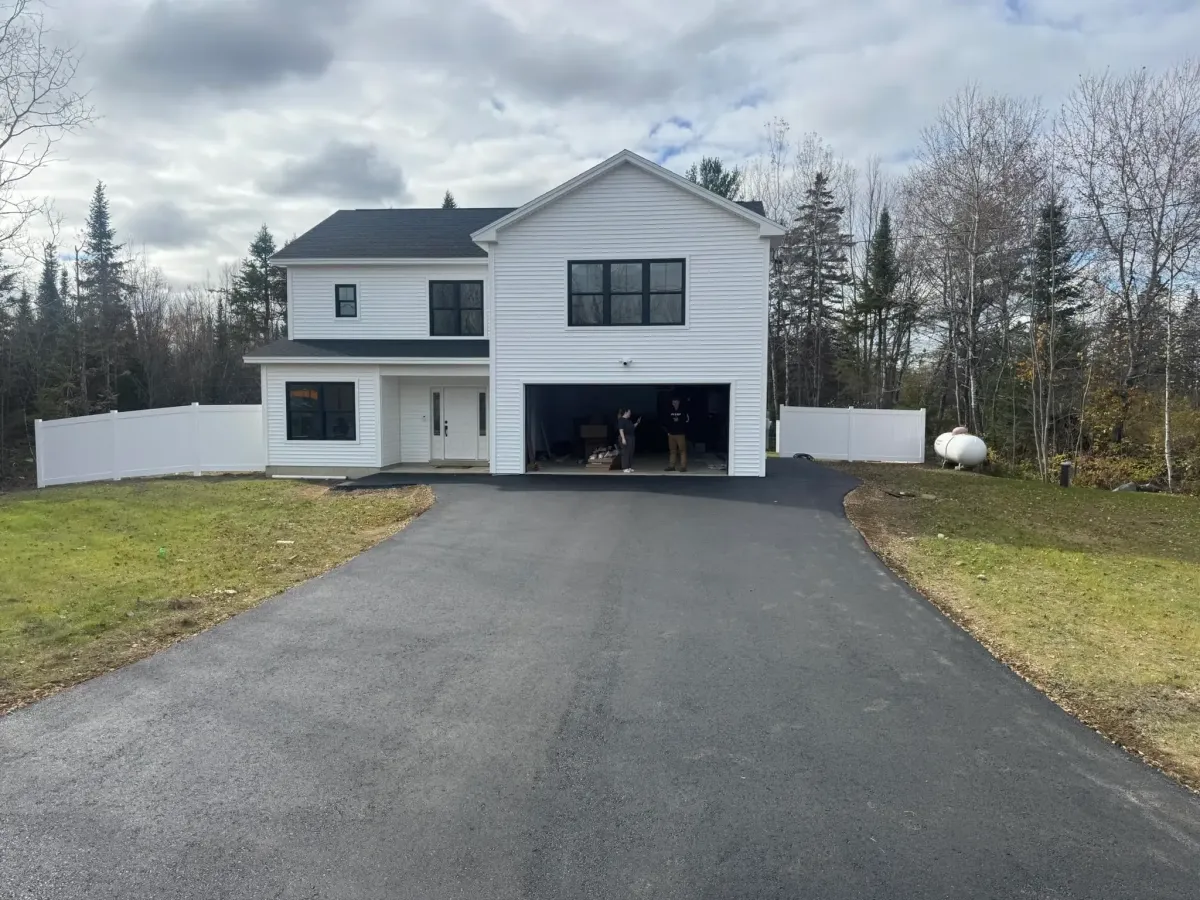
How Often Should You Sealcoat Your Driveway in Maine?
How often should you sealcoat your driveway in Maine?
Most driveways and parking lots in Maine should be sealcoated every two to three years. The exact interval depends on the amount of traffic the surface sees, how much sun exposure it gets, how well it was originally installed, and how aggressively road salt is used in the area. Maine's climate accelerates asphalt wear compared to most states, so staying on a consistent sealcoating schedule pays off significantly over the life of the pavement.
Maine homeowners ask about sealcoating timing more than almost any other paving question, and for good reason. Get the schedule right and your driveway holds up for decades. Let it slip and the Maine climate will find every weakness in the surface faster than you expect.
This post covers exactly how often to sealcoat in Maine, what factors move that interval up or down, and how to tell when your driveway is overdue.
Why Sealcoating Frequency Matters More in Maine
Sealcoating is not a cosmetic service. It is a protective barrier between your asphalt and the forces that degrade it: water infiltration, UV oxidation, road salt, and freeze-thaw cycling. In a mild climate, an unprotected driveway deteriorates slowly enough that irregular sealcoating schedules are not catastrophic. In Maine, the window between "needs sealcoating" and "needs repairs" is shorter than most homeowners expect.
The freeze-thaw cycle is the primary reason. Every time water enters the surface of unprotected asphalt and freezes, it expands and widens whatever opening let it in. Over a Maine winter, that process repeats dozens of times. A properly sealcoated surface gives water nowhere to enter. An unprotected surface is absorbing every bit of it.
The cost of sealcoating a standard residential driveway in Maine is a fraction of what even minor asphalt repairs cost, and a small fraction of what full replacement costs. The math on staying current with sealcoating is straightforward.
The Standard Recommendation: Every Two to Three Years
For most residential driveways in Central and Northern Maine, sealcoating every two to three years is the right baseline. This interval keeps the surface properly protected through Maine's seasonal extremes without over-applying sealcoat, which can actually cause problems of its own by building up layers that crack and peel.
The two-to-three-year range is not arbitrary. It reflects how long a professionally applied sealcoat holds up under normal residential traffic and Maine weather conditions before the protective layer begins to thin and lose effectiveness.
If you cannot remember the last time your driveway was sealcoated, it has almost certainly been too long.
What Moves the Interval Shorter
Several factors push the recommended sealcoating interval toward the shorter end of the range, or even below it.
High traffic volume is one. A driveway that sees multiple vehicles daily, frequent deliveries, or regular use by trucks or heavy equipment wears through a sealcoat faster than one with light residential use. Commercial parking lots, for this reason, are often sealcoated on a tighter schedule than residential driveways.
Heavy road salt exposure is another. Driveways at the base of steep grades, near busy municipal roads, or in areas where salt application is heavy see accelerated surface degradation. The salt works on the asphalt binder and compounds the freeze-thaw damage cycle. More frequent sealcoating helps offset this.
Full sun exposure also shortens the effective life of a sealcoat. UV rays oxidize asphalt and break down the sealcoat surface faster on driveways with no tree cover or shade. A south-facing driveway with full afternoon sun may need attention closer to the two-year mark than a shaded north-facing surface.
What Moves the Interval Longer
Conversely, some driveways can go closer to three years between applications without issue.
Light traffic is the main factor. A single-car driveway used by one or two vehicles daily puts far less mechanical stress on the sealcoat than a busy household. The surface wears more slowly and the protective layer lasts longer.
Significant tree cover and shade slow UV degradation. Driveways that are mostly shaded hold their sealcoat longer than fully exposed surfaces, all else being equal.
Higher quality original installation also matters. A driveway built with proper base depth, correct grading, and quality asphalt is under less structural stress than one with shortcuts in the base. Less stress on the pavement means the sealcoat is doing less protective work and can last closer to the three-year mark.
When to Sealcoat a Brand New Driveway
A newly paved driveway should not be sealcoated immediately. Fresh asphalt needs time to cure and off-gas before a sealcoat is applied. Sealing too soon traps oils that need to evaporate as part of the hardening process and can actually soften and damage the surface.
The standard recommendation is to wait six months to one year after new paving before the first sealcoat application. In Maine, where the paving season is short, this often means paving in one season and scheduling the first sealcoat for the following spring or summer. After that first application, move to the two-to-three-year schedule.
How to Tell If Your Driveway Is Overdue for Sealcoating
You do not need a contractor to tell you whether your driveway needs sealcoating. A few visual cues make it fairly clear.
Color is the most obvious indicator. A properly protected asphalt surface is dark black or very dark gray. A driveway that has faded to a light gray or brownish tone has oxidized and the protective layer has thinned significantly. The color change is not cosmetic. It is a sign that the asphalt binder is drying out and the surface is becoming brittle.
Surface texture is another indicator. Run your hand across the driveway. A sealcoated surface feels relatively smooth. An unprotected surface feels rough and porous, with visible aggregate texture, because the finer material that fills surface pores has worn away.
Small surface cracks beginning to form are a signal that sealcoating is overdue and should happen as soon as conditions allow. Cracks should be filled before sealcoating is applied, so a driveway showing early cracking needs both services, not just the sealcoat.
If you are seeing larger cracks, alligator cracking patterns, or soft spots in the surface, the driveway needs an assessment rather than just a sealcoat. Those signs point to structural issues that sealcoating will not fix.
Can You Sealcoat Too Often?
Yes, and it is worth understanding why. Sealcoat builds up in layers. When too many coats are applied too frequently, the accumulated layers become thick enough to crack on their own, independent of the asphalt underneath. Peeling and flaking sealcoat is often the result of over-application rather than poor product quality.
Sealcoating annually on a driveway that does not need it is not a better version of the two-to-three-year schedule. It is a different problem. A professional contractor will assess the current condition of the surface and tell you honestly whether sealcoating is warranted or whether you should wait another season.
Does Sealcoating Replace Crack Filling?
No. Sealcoating and crack filling are related but separate services. Sealcoating is a surface coating applied over the entire driveway. Crack filling is the repair of specific cracks before the sealcoat is applied.
Applying sealcoat over unfilled cracks does not seal them. The sealcoat bridges the crack temporarily but does not bond into it, and the crack continues to allow water infiltration underneath the new coating. Cracks need to be properly filled first, then the sealcoat applied over a clean, repaired surface.
If your driveway has cracks, the correct sequence is assessment, crack filling, and then sealcoating. A reputable contractor handles both as part of the same service visit rather than treating them as separate jobs.
What a Professional Sealcoating Visit Looks Like
A professional sealcoating job starts with surface cleaning to remove dirt, debris, oil spots, and anything else that would prevent the sealcoat from bonding properly. Any cracks present are filled and allowed to set before the sealcoat is applied. The sealcoat is then applied evenly across the entire surface, typically with a squeegee or spray system, and the driveway is blocked off while it cures.
Most residential driveways in Maine are completed in a single visit. Curing time is typically 24 to 48 hours before vehicle traffic, though foot traffic is usually possible within a few hours. A professional contractor will give you a specific curing window based on the weather conditions on the day of the job.
Frequently Asked Questions About Sealcoating in Maine
How much does sealcoating cost in Maine?
Professional sealcoating for a standard residential driveway in Maine typically costs between $250 and $600 depending on the size of the driveway and whether crack filling is included. Larger driveways and commercial parking lots will cost more. The price per square foot tends to decrease on larger surfaces because setup and mobilization costs are spread across more area. Sealcoating is one of the most cost-effective maintenance investments you can make for an asphalt surface. The cost of sealcoating every two to three years is a fraction of what even minor asphalt repairs cost and a small fraction of what full driveway replacement runs.
What happens if you sealcoat too soon after new paving?
Sealing a newly paved driveway too soon is one of the most common mistakes Maine homeowners make after getting a new driveway installed. Fresh asphalt needs time to cure and off-gas before a sealcoat is applied. The oils in new asphalt need to evaporate as part of the hardening process, and sealing the surface too early traps those oils underneath, which softens the asphalt and reduces the life of both the pavement and the sealcoat. The standard recommendation is to wait six months to one year after new paving before applying the first sealcoat. In Maine, where the paving season is short, this typically means paving in one season and scheduling the first sealcoat for the following spring or summer.
Can you sealcoat in the fall in Maine?
Yes, fall sealcoating is viable in Maine but the window is shorter and more weather-dependent than spring. September is the most reliable fall month for sealcoating in Central and Northern Maine. October becomes risky because overnight temperatures can drop below freezing before the sealcoat has had time to fully cure, which compromises the bond and reduces how long the coating lasts. Sealcoating requires sustained air and pavement temperatures above 50 degrees Fahrenheit and at least 24 to 48 hours of dry weather after application. If your driveway needs sealcoating and you have missed the spring window, aim for September and do not wait past early October.
Does sealcoating fix cracks in a driveway?
No. Sealcoating and crack filling are separate services and should not be confused. Sealcoating is a protective coating applied over the entire driveway surface. It does not fill or repair existing cracks. Applying sealcoat over unfilled cracks bridges them temporarily but does not bond into the crack, and water continues to infiltrate underneath the new coating. Cracks need to be properly filled before sealcoating is applied. The correct sequence is crack filling first, allowing the filler to set, and then applying the sealcoat over a clean and repaired surface. A reputable contractor handles both as part of the same service visit and will not apply sealcoat over cracks that have not been addressed.
Maine Paving provides professional sealcoating for residential driveways and commercial parking lots across the Bangor, Newport, Waterville, Augusta, and Ellsworth areas. Every sealcoating project includes a free on-site estimate and is backed by our satisfaction guarantee. Call us at (207) 745-1461 or contact us at themainepaver.com to get started.
For a complete overview of asphalt paving in Maine, visit our Maine Paving Guide.