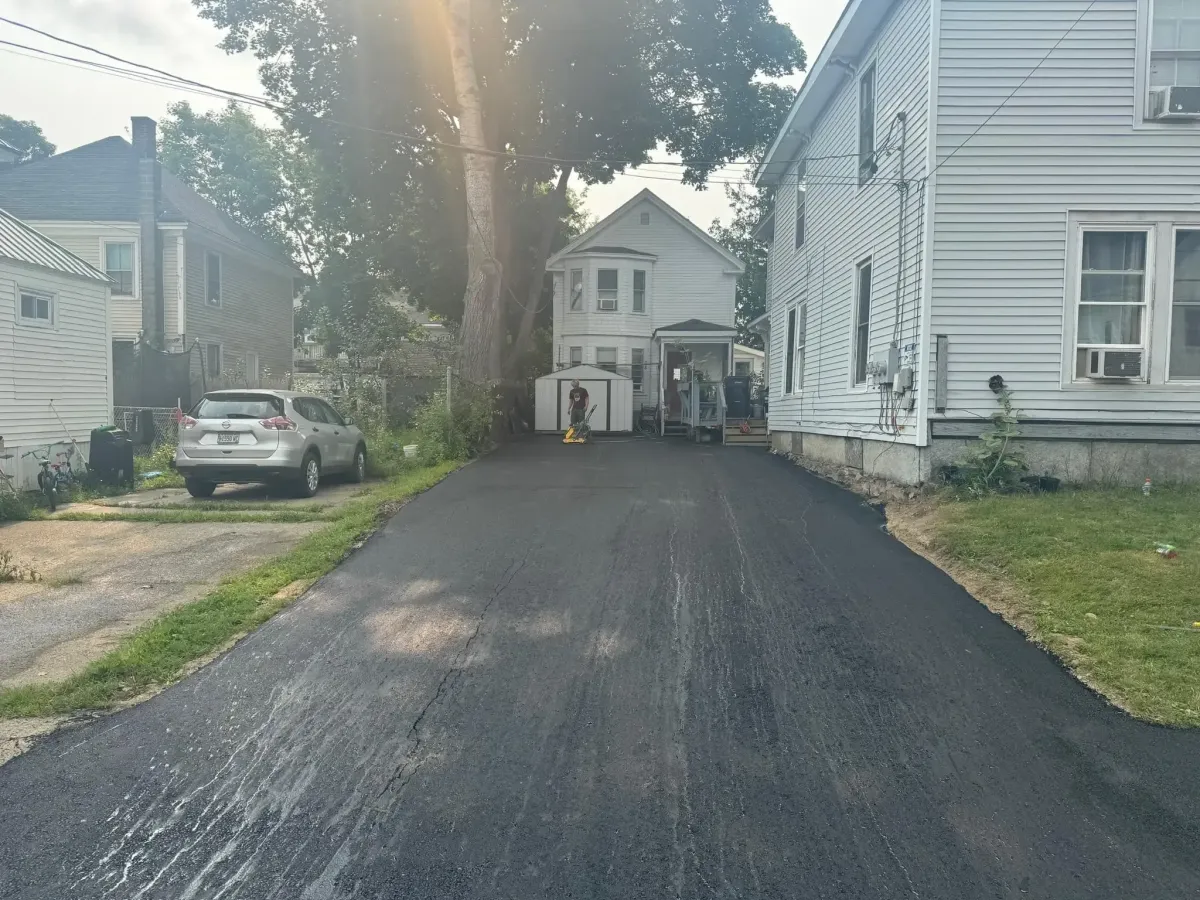
What Shortens the Life of an Asphalt Driveway in Maine? (And What You Can Do About It)
What shortens the life of an asphalt driveway in Maine?
The biggest threats to asphalt longevity in Maine are freeze-thaw cycling, road salt exposure, poor drainage, tree root intrusion, and deferred maintenance. Maine's climate is significantly harder on pavement than most of the country, with temperature swings of 60 to 80 degrees between seasons and freeze-thaw cycles that can run multiple times per week during shoulder seasons. A driveway that was properly installed and regularly sealcoated can last 20 to 30 years. One that skips maintenance in this climate often needs replacement in 12 to 15.
Maine is not a forgiving place to be pavement. The same climate that makes this state worth living in puts asphalt through conditions that would accelerate wear anywhere, and does it harder and faster than most property owners expect. Understanding what actually damages your driveway, and what you can do about each threat, is the most practical thing you can know as a Maine homeowner with an asphalt surface.
Why Maine Is Harder on Asphalt Than Most States
Asphalt is a flexible pavement material designed to expand and contract with temperature changes. In most of the country, that movement is gradual. In Maine, it is extreme.
Central and Northern Maine regularly sees temperature swings of 60 to 80 degrees Fahrenheit between summer and winter. During shoulder seasons, pavement can freeze overnight and thaw by afternoon, sometimes multiple times in a single week. Each cycle stresses the surface and the base underneath it. Add road salt, snowplow traffic, and frost heave in areas with poor drainage, and it becomes clear why identical pavement lasts significantly longer in a milder climate than it does in Bangor or Newport.
This is not a reason to avoid asphalt. It is a reason to understand what you are protecting against so you can make decisions that extend your investment rather than shorten it.
Freeze-Thaw Cycling
Freeze-thaw cycling is the single biggest threat to asphalt driveways in Maine, and it works from the inside out.
When water gets into the asphalt surface through cracks or surface porosity and then freezes, it expands. That expansion puts pressure on the surrounding pavement. When it thaws, it contracts, leaving small voids. Repeat this process dozens of times over a Maine winter and spring, and you have the mechanism behind most of the cracking, heaving, and pothole formation that property owners deal with every season.
The damage often starts at the base level, where water infiltration and frost movement are working on the structure of the pavement long before surface cracks make the problem obvious. By the time cracking becomes visible across a wide area, the damage underneath has typically been building for more than one season.
Keeping the surface sealed is the primary defense. Sealcoating closes surface pores and fills minor cracks before water can find its way into the pavement structure.
Road Salt Exposure
Road salt does not chemically attack asphalt the way it destroys concrete, but its effect on pavement lifespan in Maine is real and measurable.
Salt lowers the freezing point of water, which extends the period during which repeated freeze-thaw cycles occur. Instead of water freezing once and staying frozen, it cycles repeatedly through freeze and thaw at lower temperatures, compounding the mechanical damage described above. Salt also degrades the oils in asphalt over time, contributing to oxidation and surface brittleness.
For driveways near roads that receive heavy municipal salting, the wear accumulates faster than average. More frequent sealcoating and attentive crack repair help offset this. Freshwater rinsing of driveway surfaces in late winter, once temperatures allow, can also reduce residual salt exposure.
Poor Drainage
Water that sits on or around pavement is one of the most consistent predictors of early failure. Driveways that slope toward the house, have low spots that collect water, or were built without attention to surface drainage put constant stress on the base.
When water cannot drain away from the surface, it finds its way into cracks, works down to the base layer, and begins undermining the structural integrity of the pavement from beneath. In winter, that water freezes at the base level and causes frost heave. In spring, as it thaws, it leaves the base material saturated and unstable.
Proper grading during the original installation is the correct fix. For existing driveways with drainage problems, improvements to grading and drainage can be made as part of a repair or replacement project. Addressing drainage problems is not optional in Maine's climate. It is foundational to getting reasonable life out of any paved surface.
Tree Roots
In the wooded regions of Central and Northern Maine, tree roots are a more common cause of driveway failure than most homeowners realize.
Roots grow under paved surfaces in search of water and nutrients. As they expand, they lift sections of pavement, creating humps, cracks, and uneven surfaces that accelerate water infiltration and make the driveway hazardous. Once roots have established under a driveway, the damage tends to be progressive.
This is a site-specific problem that an experienced contractor can assess before installation or during a replacement project. In some cases, root barriers or adjusted driveway routing can minimize the risk. In others, tree removal is the most practical long-term solution. Either way, it is worth discussing during the estimate phase if trees are close to the planned or existing driveway.
Heavy Vehicle Traffic
Residential asphalt is designed and built for passenger vehicle loads. Regular use by heavy trucks, equipment, or loaded trailers puts more stress on the surface and base than a standard residential driveway is built to handle.
The damage shows up as rutting, surface depression, and accelerated cracking, particularly in areas where heavy vehicles turn or stop. If your driveway regularly sees this kind of use, a thicker pavement section and more robust base construction is worth the additional upfront cost. Discussing your actual usage with the contractor before installation allows them to spec the job appropriately.
Deferred Maintenance
Of all the factors that shorten driveway lifespan in Maine, deferred maintenance is the most preventable.
Small cracks that go unfilled become large cracks. Large cracks that go unrepaired allow water infiltration that leads to base failure. A surface that is never sealcoated oxidizes, becomes brittle, and deteriorates faster than protected asphalt under identical conditions. The lifespan numbers for asphalt assume basic maintenance is being performed. Without it, those numbers drop significantly, and they drop faster in Maine than anywhere else because the stressors are more severe.
The cost of staying on a maintenance schedule is a fraction of the cost of early replacement. Sealcoating every two to three years, filling cracks when they appear, and addressing drainage issues before they become structural problems are the core habits that separate driveways that reach 25 to 30 years from ones that need replacement at 12 to 15.
What You Can Do to Protect Your Driveway
The actions that actually make a difference in Maine's climate come down to a consistent, straightforward list.
Sealcoat every two to three years, starting six to twelve months after new installation. Fill cracks as soon as they appear, before water finds a path into the base. Confirm that drainage is working and water is not pooling on or near the surface. Avoid sharp metal snow shovels and plow blades that gouge the surface. Limit heavy vehicle traffic if the driveway was not built to handle it. Watch the edges: driveway edges deteriorate first and the damage spreads inward if it is not caught early.
None of these are expensive or complicated on their own. Together, they are the difference between a driveway that reaches its full potential lifespan and one that fails well ahead of schedule.
Not Sure What Your Driveway Actually Needs?
If your driveway is showing signs of wear or you want an honest assessment of where it stands, Maine Paving offers free on-site estimates across the Bangor, Newport, Waterville, and Augusta areas. We look at the surface, the base, and the drainage, and give you a straight answer on what the driveway actually needs, whether that is sealcoating, repairs, or a full replacement. No pressure. No runaround.
Contact Maine Paving today to schedule your free estimate.
For a complete overview of asphalt paving in Maine, visit our Maine Paving Guide.