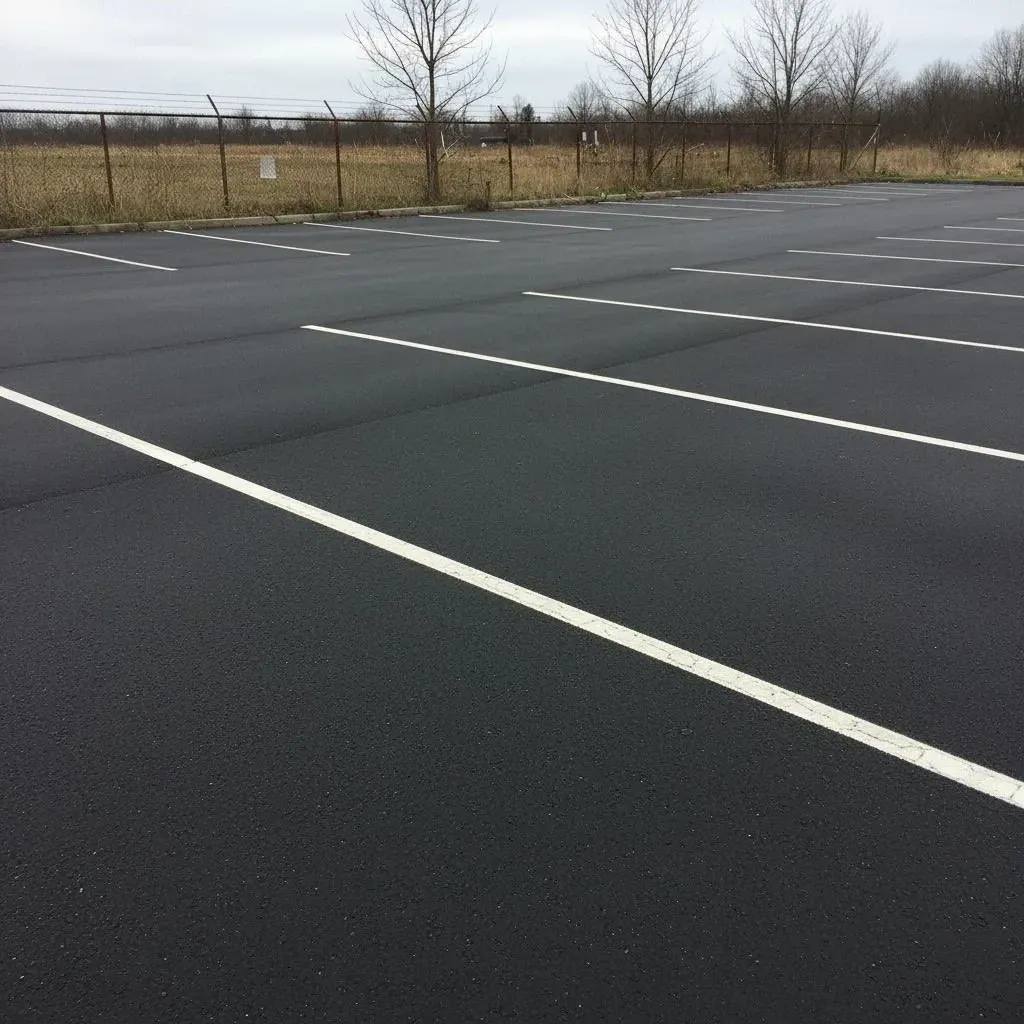
What Does Commercial Parking Lot Paving Cost in Maine?
What does commercial parking lot paving cost in Maine?
Commercial parking lot paving in Maine typically costs between $1.50 and $4.00 per square foot for the asphalt installation itself, with total project costs including excavation, grading, and base preparation often running between $3.00 and $7.00 per square foot depending on site conditions. A small commercial lot of 5,000 square feet might run $15,000 to $35,000. A larger lot of 20,000 square feet or more will scale accordingly. The only way to get an accurate number is a free on-site estimate from a contractor who has assessed your specific site.
Commercial parking lot paving is a different conversation than residential driveway paving. The scale is larger, the usage demands are higher, the drainage requirements are more complex, and the cost of getting it wrong is more significant. Maine's climate adds an additional layer of consideration that property owners in milder states simply do not have to think about.
This post covers what drives the cost of commercial parking lot paving in Maine, what questions to ask before hiring a contractor, and what separates a lot that holds up from one that starts failing within a few seasons.
Why Commercial Parking Lot Paving Costs More Per Project Than Residential
The per-square-foot cost of asphalt is similar whether you are paving a driveway or a parking lot. What drives the higher total cost of commercial projects is everything surrounding the asphalt itself.
Commercial lots require more extensive site preparation. Grading a large flat area to drain correctly in all directions requires more precision and more earthwork than a residential driveway. Drainage infrastructure, including catch basins, drainage channels, and properly sloped surfaces, is a significant cost component on commercial projects that does not exist on most residential jobs.
Subbase requirements are also more demanding. A parking lot that handles daily traffic from passenger vehicles, delivery trucks, and occasionally heavy equipment needs a deeper and more robust gravel base than a residential driveway. Cutting corners on base depth is the most common reason commercial lots fail ahead of schedule.
Line striping, ADA-compliant accessible parking spaces, fire lane markings, and directional signage are additional scope items that are standard on commercial lots and not part of a residential paving project.
What Factors Drive the Cost of a Commercial Parking Lot in Maine
Lot Size and Configuration
Size is the most direct cost driver. Per-square-foot costs tend to decrease slightly on larger lots because mobilization and setup costs are spread across more surface area. A 3,000-square-foot lot costs more per square foot than a 15,000-square-foot lot, even with identical site conditions.
Configuration matters too. A simple rectangular lot with straightforward access is less expensive to pave than an irregularly shaped lot with multiple entrances, islands, curbing, or tight maneuvering areas that require more precise work.
Existing Surface Condition
Paving over an existing lot requires removal and disposal of the old surface before new asphalt can be laid. Demolition and hauling is a meaningful line item on larger lots. Some older lots can be milled rather than fully removed, which recycles the material and reduces disposal costs, but not every surface is a candidate for milling.
If the existing base is still structurally sound, costs are lower because base reconstruction is not required. If the base has failed, rebuilding it properly is not optional regardless of the additional cost, because new asphalt over a failed base will fail on the same timeline.
Drainage Requirements
Maine's heavy precipitation and snowmelt create significant drainage demands on commercial lots. A lot that does not drain correctly will have standing water that accelerates pavement deterioration and creates liability issues for property owners in winter when that water freezes.
Proper drainage design, including the placement of catch basins and the grading of the surface to direct water to appropriate outlets, is one of the most important and cost-variable components of a commercial paving project. Lots with existing drainage infrastructure in good condition cost less to address than sites that need drainage built from scratch.
Subbase Depth and Quality
The subbase is what the asphalt sits on. In Maine, where frost depths in Central and Northern areas can reach 48 inches in hard winters, subbase depth is particularly important. A lot that is built over an inadequate base will heave, settle, and crack as frost moves through the ground beneath it.
Commercial lots that handle heavier vehicles need thicker asphalt sections as well. A lot that regularly sees delivery trucks or loaded vehicles should be built to a higher specification than one used exclusively by passenger cars. Discussing actual usage with your contractor before the project is scoped allows them to build the lot to the correct standard the first time.
What Is Included in a Commercial Paving Estimate
A complete commercial paving estimate should itemize every component of the project so you know exactly what you are comparing when you receive multiple quotes. The line items to look for include demolition and removal of existing surface if applicable, grading and site preparation, subbase material and installation, asphalt material and installation by thickness and layer, drainage work including any catch basins or inlets, line striping and markings, and any curbing or edging included in the scope.
A quote that gives you a single total number without breaking down the components is a quote you cannot evaluate properly. Ask for the breakdown. A reputable contractor will provide it without hesitation.
How Maine's Climate Affects Commercial Lot Longevity
A commercial parking lot in Maine faces the same climate stressors as a residential driveway, scaled up by the demands of daily traffic and heavier vehicle loads.
Freeze-thaw cycling works on commercial lot surfaces the same way it works on driveways, but the damage accumulates faster because traffic is constant and the lot cannot rest between uses the way a residential driveway does. Cracks that form in the surface allow water infiltration, which leads to base damage during freeze cycles, which leads to potholes and structural failure.
Regular sealcoating and crack filling on a commercial lot extends its service life significantly and reduces the total cost of ownership over time. Most commercial lots in Maine should be sealcoated every two to three years, with crack filling performed as part of that service or separately if cracks develop between scheduled maintenance visits.
A commercial lot that is properly maintained will typically last 20 to 25 years before full replacement is warranted. One that receives no maintenance in Maine's climate will show significant deterioration well before that timeline.
Line Striping and ADA Compliance
Line striping is not just a finishing detail. It is a legal requirement for commercial properties, and ADA-compliant accessible parking spaces have specific dimensional and signage requirements that must be met.
Maine Paving handles line striping as part of our commercial paving service. We lay out accessible spaces to ADA specification, mark fire lanes where required, and apply directional markings as needed for traffic flow. If your existing lot needs restriping without a full repave, that is a standalone service we offer as well.
Restriping is also an opportunity to reconfigure a lot that has outgrown its original layout or to add accessible spaces if your property's requirements have changed.
When to Repave vs. Maintain a Commercial Lot
The repair vs. replace decision on a commercial lot follows the same logic as a residential driveway, with the added consideration that a deteriorating parking lot affects your customers, your tenants, or your employees every day it is in poor condition.
Surface-level cracking and fading that has not reached the base are good candidates for crack filling and sealcoating. Structural cracking, significant heaving, base failure, or a lot that has exceeded 20 years without consistent maintenance is a better candidate for full replacement.
The cost of lost business, tenant complaints, or liability from a pothole that damages a customer's vehicle often exceeds the cost of timely maintenance. Commercial property owners who stay current on parking lot maintenance spend less over the long term than those who defer until replacement is unavoidable.
Frequently Asked Questions About Commercial Parking Lot Paving in Maine
How long does a commercial parking lot last in Maine?
A properly installed and regularly maintained commercial parking lot in Maine typically lasts 20 to 25 years before full replacement is warranted. The key word is maintained. A lot that receives consistent sealcoating every two to three years and prompt crack filling when cracks appear will reach the higher end of that range. A lot that receives no maintenance in Maine's climate will show significant structural deterioration well before 20 years. The freeze-thaw cycle, heavy traffic, and road salt exposure all accelerate wear on unmaintained surfaces faster than most property owners expect.
What is the difference between repaving and resurfacing a parking lot?
Repaving means removing the existing asphalt surface entirely, assessing and rebuilding the base if needed, and installing fresh asphalt from the ground up. Resurfacing, sometimes called an overlay, means applying a new layer of asphalt over the existing surface without removing what is underneath. Resurfacing is less expensive but is only appropriate when the existing base is structurally sound and the surface damage is limited to the top layer. If the base has failed or there is widespread alligator cracking, an overlay will reflect the same problems through the new surface within a few seasons. A proper on-site assessment determines which approach is right for your lot.
How often should a commercial parking lot be sealcoated in Maine?
Most commercial parking lots in Maine should be sealcoated every two to three years, similar to residential driveways but with closer attention to wear patterns from heavier traffic. Lots that see frequent delivery truck traffic, high daily vehicle volume, or significant road salt exposure may benefit from sealcoating closer to the two-year mark. Sealcoating extends the life of the asphalt, reduces the frequency of crack repairs, and keeps the surface looking professional for customers and tenants. Crack filling should be performed as part of each sealcoating visit or separately if significant cracks develop between scheduled maintenance cycles.
Do you need a permit to pave a parking lot in Maine?
In most Maine municipalities, commercial paving projects require a permit, particularly for new installations or significant expansions that affect drainage or impervious surface coverage. Requirements vary by town and by project scope. Some municipalities also have stormwater management requirements for commercial lots above a certain size. Maine Paving handles the permitting conversation as part of the project planning process and can advise on what your specific municipality requires before work begins. When in doubt, check with your local code enforcement office before scheduling any commercial paving work.
Maine Paving works with commercial property owners, property managers, and businesses across the Bangor, Newport, Waterville, Augusta, and Ellsworth areas on parking lot paving, repaving, sealcoating, crack filling, and line striping. Every commercial project starts with a free on-site estimate. Call us at (207) 745-1461 or contact us at themainepaver.com to schedule yours.
For a complete overview of asphalt paving in Maine, visit our Maine Paving Guide.