Driveway Installation in Augusta, Maine: Homeowner's Guide
Plan a Driveway That Survives Maine Winters
A new driveway is a big upgrade, but in Augusta, Maine, it has to do more than look nice. It needs to hold up to freeze-thaw cycles, heavy plowing, sanding, and long stretches of cold weather. If the driveway is not planned the right way from the start, problems show up fast.
Good planning before any construction starts helps prevent cracks, potholes, and drainage issues later on. The right design, base, and surface can mean the difference between a driveway that fails early and one that stays solid for many years. As a local paving team working across Central and Northern Maine, we understand the climate, local soils, and typical rules in and around Augusta, which makes the process smoother and easier for homeowners.
Understand Your Driveway Options in Augusta
For most homes in Augusta, the main choices are asphalt, gravel, or concrete. Each has strengths, but the climate here makes some options more practical than others.
Here is how they compare in simple terms:
• Asphalt: Flexible surface that handles freeze-thaw well, easier to repair, suited to plowing and sanding
• Gravel: Lower upfront build, but needs frequent grading and topping, can rut and wash out
• Concrete: Hard and long-lasting in mild climates, but more prone to cracking with frequent freeze-thaw
Asphalt is often a strong match for driveway installation in Augusta, Maine, because it can expand and contract with temperature changes better than a rigid surface. It also works well with winter maintenance, which is a big factor in this area.
The way you plan to use your driveway matters too. You will want to think about:
• Number and size of vehicles
• Heavy loads like delivery trucks, trailers, or RVs
• Turning and parking areas, such as spots near a garage or side entry
Heavier use usually calls for a thicker asphalt layer and a deeper, stronger stone base. That base helps spread weight, reduce rutting, and keep the surface from shifting.
Looks also count. The shape, width, and edging help your driveway fit your home. Some homeowners like:
• A straight, simple drive from road to garage
• A gentle curve that softens the view from the street
• Defined edges with stone or clean-cut asphalt that works with the landscaping
Planning these details early helps guide grading, layout, and where water will go when it runs off the driveway.
Site Evaluation and Permits Before Breaking Ground
Before any equipment shows up, the site needs a careful look. A professional visit is important to check:
• Soil conditions and whether the ground is firm or soft
• Slope, high spots, and low spots
• How water currently drains after rain or snowmelt
• Access to the public road and room for safe entry and exit
Augusta and surrounding towns often have driveway and public-road access rules, especially where the driveway meets the street. There may also be simple permit steps, plus any homeowner association or subdivision guidelines. Getting clear on these early keeps your project from being delayed.
Drainage planning is a big part of this step. If water is allowed to sit on or alongside the driveway, it can freeze, create ice patches, and speed up surface failure. A good design tries to:
• Pitch the driveway slightly so water sheds off the surface
• Direct runoff to safe areas of your yard, not toward buildings
• Avoid creating deep ruts or channels that will erode over time
Solving drainage and grading questions before work starts helps protect your investment and your day-to-day use of the driveway.
Timing Your Driveway Installation in Augusta, Maine
Asphalt paving depends heavily on temperature and weather. In Central Maine, the best window for new driveway installation is usually late spring through early fall, when the ground has thawed and the air is warm and fairly dry.
Late July is often a strong time for driveway installation in Augusta, Maine. The weather is usually warm enough so the asphalt can be placed, worked, and compacted the way it should be. Dry conditions help the base stay stable and help crews keep to the planned schedule.
Planning ahead lets you:
• Reserve preferred dates with your paving crew
• Allow time for any needed permits
• Make room in the schedule for proper site prep and inspections
A little extra planning on timing helps the work move quickly and reduces the chance of weather delays.
What to Expect During the Paving Process
Once the plan is in place, the actual paving follows a clear sequence. While every property is a little different, most asphalt driveway projects in Augusta follow steps like these:
1. Excavation: Remove grass, old driveway material, and soft soils to the needed depth.
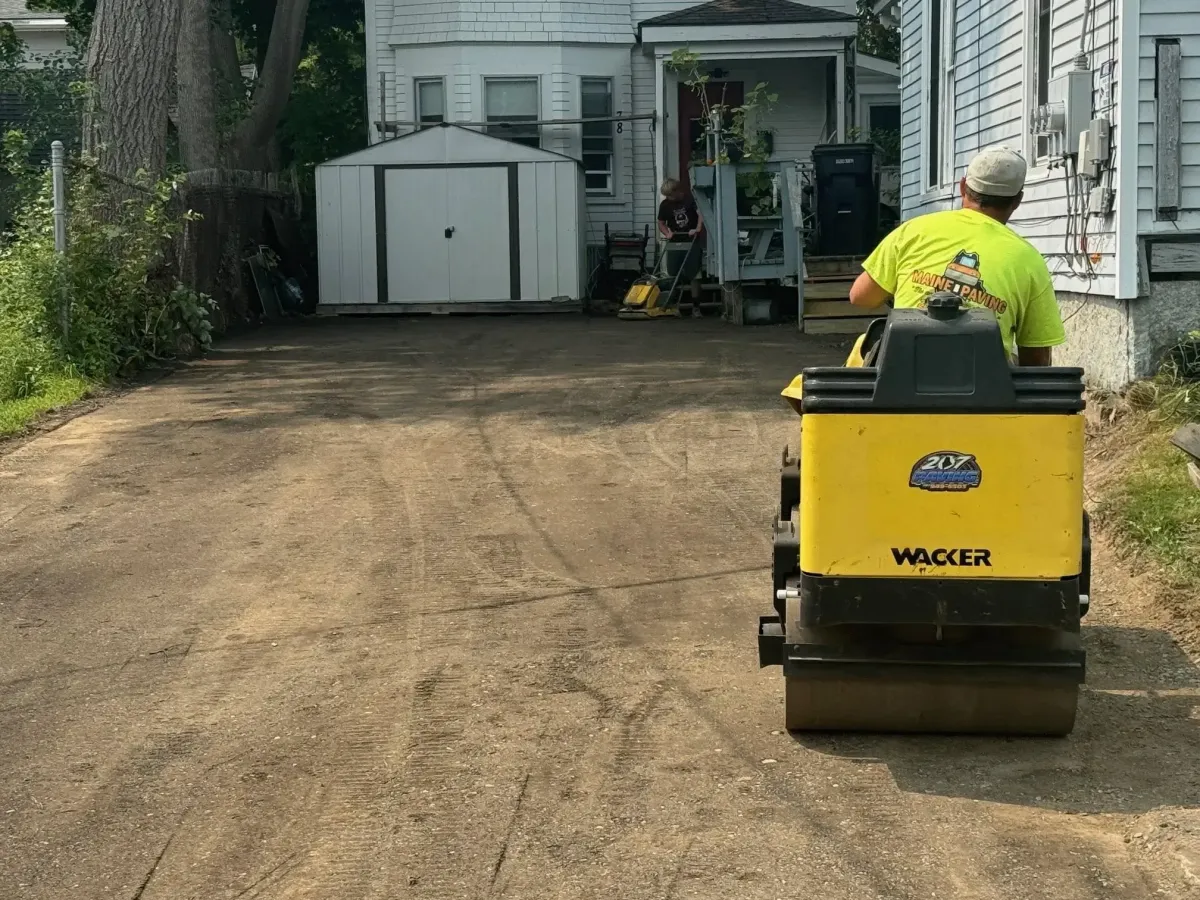
2. Base installation: Place and spread crushed stone, then compact it in layers for strength.
3. Grading: Shape the base so it has the right slope for drainage and smooth travel.
4. Asphalt paving: Lay hot asphalt over the base at the planned thickness.
5. Final rolling: Compact the asphalt so it is smooth, tight, and ready to cure.
During this work, access will be limited for a short time. A good crew will explain when you can safely walk on the surface and when you can park vehicles. In most cases, light foot traffic is allowed fairly soon, while vehicle traffic usually waits a bit longer so the asphalt can cool and set.
Early on, it is smart to:
• Avoid sharp turning of tires while parked
• Keep heavy loads off the new drive until it has had time to fully cool
• Watch for soft spots or marks and mention them right away
A strong base and careful compaction help reduce rutting, settlement, and early cracking, which means less hassle later.
Long-Term Care for a Lasting Asphalt Driveway
Once your new driveway is in place, a little regular care goes a long way. At some point after installation, sealcoating can help protect the surface from sun, water, and winter sanding. This thin protective layer can also keep the driveway looking dark and clean.
Seasonal habits also matter. Simple steps like:
• Using a plastic shovel or rubber-edged plow when possible
• Cleaning oil or fuel spills before they soak in
• Keeping gravel and sand swept off the surface
• Controlling weeds and grass at the edges
All help keep the driveway in good shape.
It is also smart to watch for early warning signs, such as:
• Small cracks starting to open
• Tiny potholes or spots where stone is showing
• Edges that are crumbling or breaking off
Catching and repairing these issues quickly helps stop water from getting down into the base and saves you from bigger problems later.
Take the Next Step Toward a Stronger Augusta Driveway
Planning a new driveway installation in Augusta, Maine, is about more than just picking a material. It is about matching the design to your property, your vehicles, and our local weather. A careful site review, smart timing, and a clear plan for long-term care all help your new surface stand up to Maine winters.
At Maine Paving, we work across Central and Northern Maine and understand the local conditions that driveways face here. When you are ready, gather a few basic details like driveway size, any soft or wet spots on your property, the types of vehicles you use, and any extras you have in mind like parking pads or walkways. With that information, it is much easier to shape a plan that fits your home and keeps your driveway strong for many seasons to come.
Get Started With Your Project Today
If you are ready to upgrade your curb appeal and add lasting value to your home, our team at Maine Paving is here to help. Learn more about our driveway installation in Augusta, Maine and see how we tailor each project to your property and budget. When you are prepared to move forward or have questions about your options, simply contact us and we will respond promptly with next steps.